Omarchy: Smudged Fingers, Not Clean Hands
Omarchy 4, Quattro, shipped August 2026 with Claude Code agents built into the Linux desktop shell. An essay on what that means for access, quality, and ownership, using Clay Shirky's printing-press argument as a lens.
Nobody praised the first printed Bibles for their craftsmanship. The type wobbled. Ink bled through thin paper. Pages ran crooked off the press, and readers got ink on their fingers just holding the thing. Monks had spent centuries perfecting the opposite: manuscripts so precise they were closer to relics than books. Gutenberg's machine didn't beat that precision. It made precision beside the point.
Clay Shirky's argument about the printing press was never that it produced better books. In Here Comes Everybody, he uses it to make one point: professional scribes lost their monopoly on reproducing a text overnight, and the quality control that monopoly enforced went down with it. Worse copies flooded the world on the way to something bigger.
Omarchy is having its own crooked-page moment.
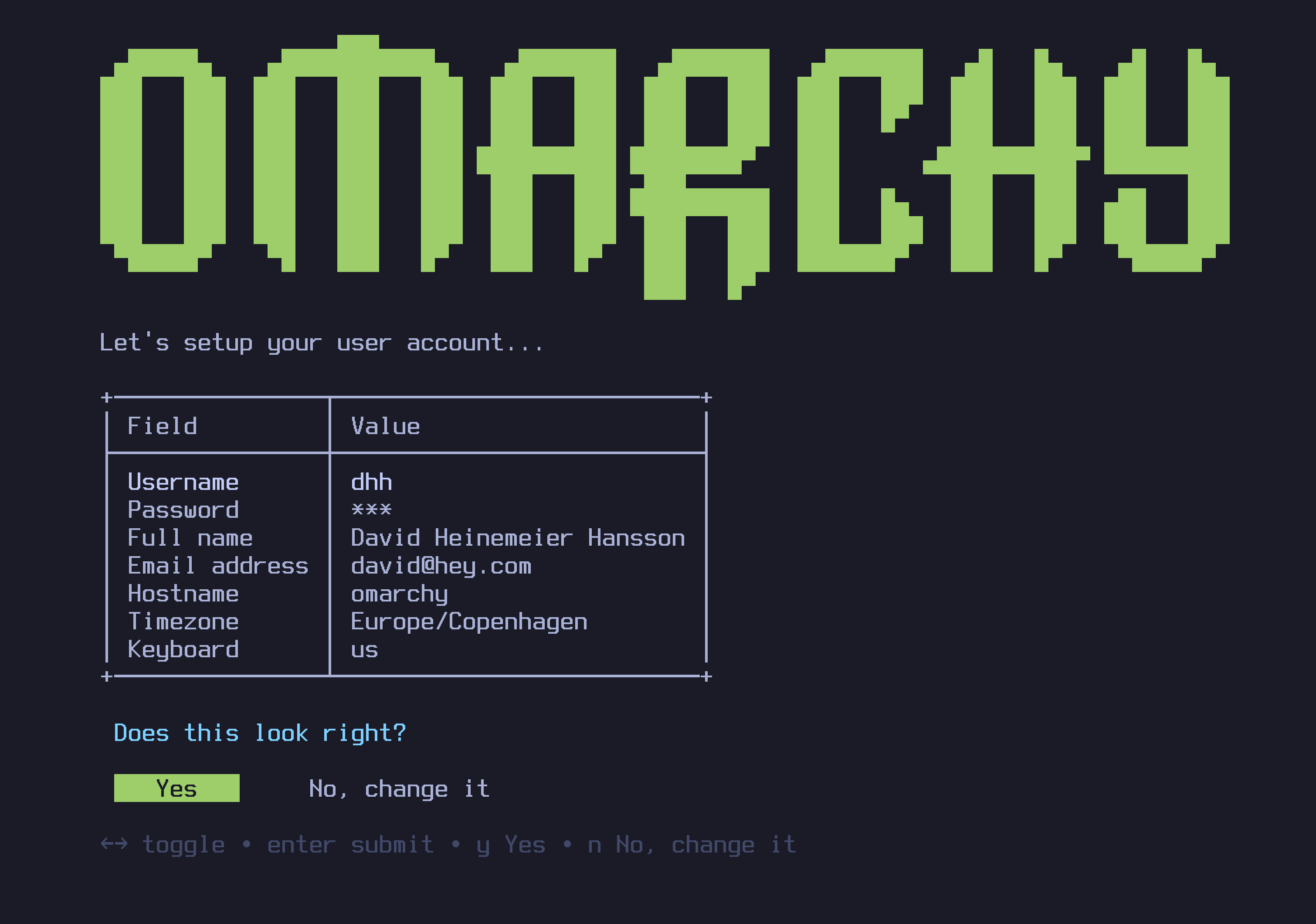
It is a free operating system, an alternative to Windows and macOS built on Linux, the open-source software that has quietly run the internet's servers for more than three decades without ever winning over the everyday desktop. Omarchy wraps Arch Linux, a notoriously bare-bones branch of Linux normally reserved for people willing to spend a weekend configuring a keyboard shortcut, in a set of defaults polished enough to use the same afternoon you install it.
It was assembled by David Heinemeier Hansson, a Danish programmer known online as DHH, who created the Ruby on Rails framework that underpins sites from GitHub to Shopify, and who co-owns the Chicago software firm 37signals, maker of the project-management tool Basecamp. The tech press can't decide whether to laugh at Omarchy or take it seriously. Both reactions miss what's underneath.
The objections are mostly fair. DHH is a divisive figure to build a movement around. In 2021, he and his co-founder banned political and societal debate on the company's internal channels, a decision that made national news and pushed staff out the door; he has been arguing with large parts of the tech industry ever since. A personal dev workflow, packaged and given a name, inherits one man's opinions about fonts and keybindings dressed up as a platform. Traditionalists have spent thirty years treating Linux as something you earn through documentation and scar tissue, and Omarchy sells a shortcut past both. None of that is wrong. It's also not the point.
Look at what Quattro, the codename for Omarchy's fourth major release, shipped this month. A bar widget that tracks how much of your weekly allowance of Claude Code, the AI coding agent built by Anthropic, is left. A system that offers your crash dump to that same agent instead of a forum thread. A skill file, dropped straight into the agent's own folder, that teaches it how to reconfigure the machine it lives on. Purists call this feature creep. It's closer to the printing press equivalent of a broken config: the fifty open browser tabs, the three-day rabbit hole of tweaking dotfiles (the text files that decide how a Linux desktop looks and behaves), replaced by something that just tells you what's wrong. The knowledge was never the real barrier. Knowing where to look for it was.
Ownership shows up in older hardware too. My case: a 2011 ThinkPad X220, a T480 with a cracked hinge, an aging MacBook Air. All three run this without complaint, right as a global shortage in memory chips has turned a new laptop back into a luxury item. That's not nostalgia. That's a book landing in hands that couldn't afford one last year.
Open systems rot in their own ways. Quattro's own release notes needed to close a flaw that let a malicious visual theme run code during installation, and another that let any user plant a file with full administrator rights anywhere on the system. That's the tax on staying open, and the community is right to keep charging it. The failure mode nobody should accept is the other one: an oligarchy with a nicer onboarding screen, Windows with a better README.
Whether this is finally the "year of the Linux desktop," a punch line the community has been repeating past its own credibility for two decades, is not a bet worth making with confidence. But something got printed anyway. The ink is still wet. Some pages still run crooked. For once, that felt like it mattered more than no press running at all.
Crooked pages built more libraries than clean hands ever did. New ideas, new freedom started like that.